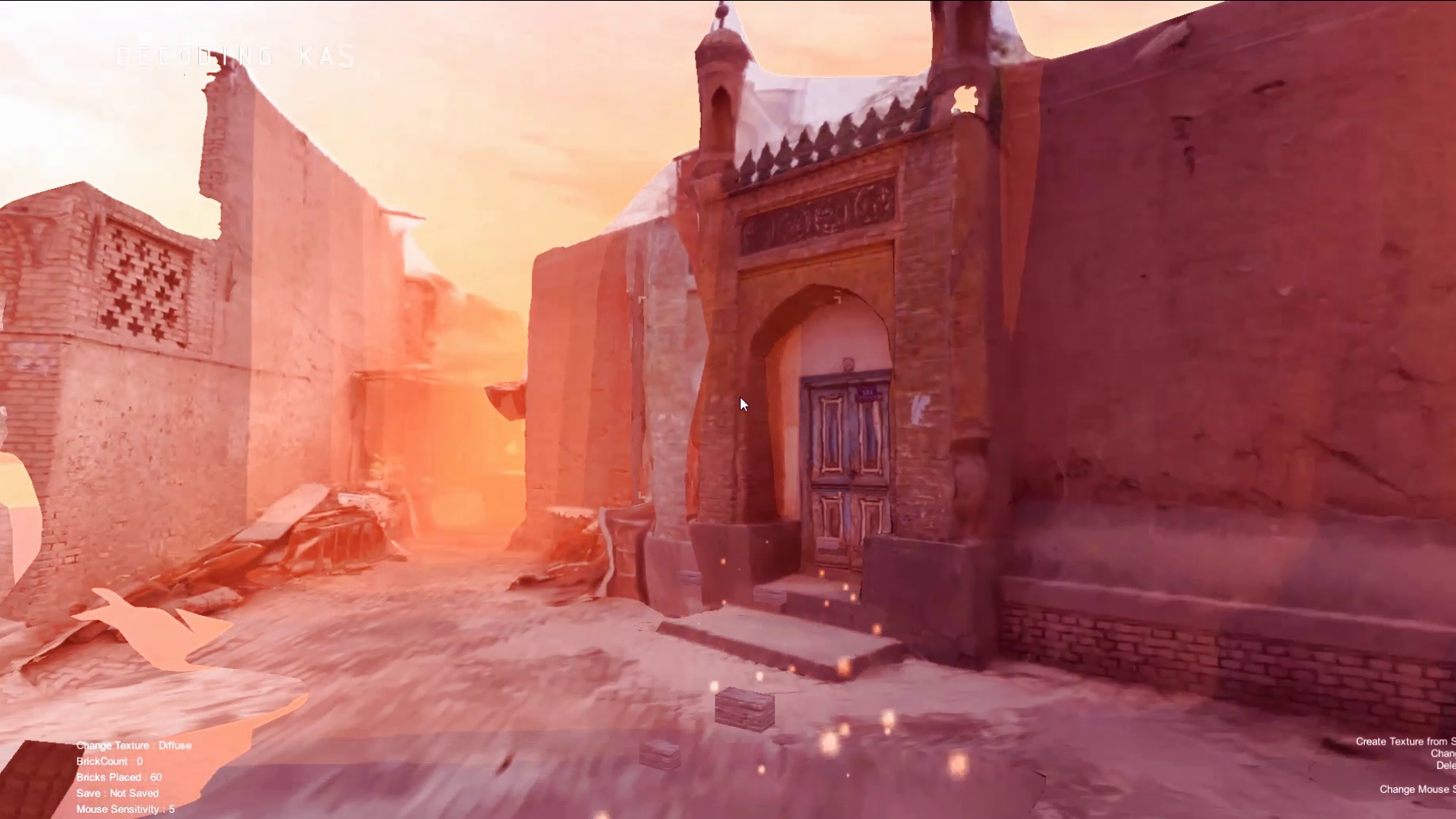

Decoding Kashgar
A Digital Design Approach to Steer and Diversify Creative Engagement in Digital Heritage
Serdar Aydin - 2018
Digital tools have become critical instruments in preserving and communicating the value of heritage as important cultural expressions of the past. A consequence of digitalisation is the democratisation of heritage institutions, such as museums, which are found to value increasingly new types of content and new profiles of audiences. Digitisation plays a vital role in the alteration of the convictions of the heritage field to ‘materiality’ and ‘actuality.’ Although researchers acknowledge the significance of digital heritage in leading us into new ways of expressing ‘authenticity’ and ‘virtuality,’ studies have been confined to heritage activities comprised of digital documentation, representation and dissemination. Previous studies have reported on the role of public engagement in a digital heritage which is criticised as consumptive, passive, guided and descriptive. Instead, the motivation of this research is to explore a new role that is ‘generative,’ ‘active’ and ‘creative’ for the production of heritage knowledge.
This dissertation demonstrates an innovative digital design approach to creative and participatory content-making in digital heritage. The research investigated the use of creative content generated collaboratively for knowledge production and acquisition in architectural heritage and tested in Kashgar, the westernmost city in China. The research conceives an interdisciplinary methodology, integrating design with the standard activities involved in digital heritage.
This dissertation is undertaken using different digital media equipment for collaboratively expressing authenticity and virtuality of heritage information. The research examines the role of creative engagement for constructing digital heritage. Creative engagement in a hybrid immersive virtual reality environment is experimented with and findings are analysed qualitatively. Then, to measure the outcome of creative engagement quantitatively, a well-known technique in data mining is used to expose undisclosed patterns. It is the first time in digital heritage that a study employs association rule mining to interpret user-generated content. The qualitative findings of two initial experiments are synthesised with quantitative results of the third experiment to investigate how the creative contribution of people in content-making is generalizable.
The investigations foster the advancement of research and practice in digital heritage beyond the frontiers of current knowledge. There is a number of fields that can apply the results of this research, including cultural heritage, computer-aided architectural design, museology, new media, TV, education, MOOC, streaming, as well as culture and game studies.